Can You Coat a Garage Floor During a Minnesota Winter?
By Permanent Coating Solutions LLC ·
Sometimes—but not in every winter condition
Winter garage floor coating may be possible when the concrete, air, materials and moisture conditions meet every requirement of the selected coating system. A cold-weather product label alone does not establish that a particular Minnesota garage is ready. Heating the air briefly does not instantly warm a cold slab.
Professional planning considers both application and the cure period. Conditions must stay suitable after the crew leaves, not merely at the moment resin touches the concrete.
Concrete temperature is not air temperature
A slab stores heat and cold. After a cold spell, the concrete may remain much colder than the air indicated by a wall thermostat. Materials also need appropriate storage and conditioning. The installer should measure the substrate rather than infer its temperature from how the garage feels.
Cold conditions can slow reactions and change working and recoat times. Some formulations allow different temperature ranges than others. Never borrow a limit from a different product or assume an additive can make any coating winter-ready.
Moisture, humidity and dew point
Warm moist air meeting cold concrete can produce condensation. Product specifications commonly require a defined temperature margin above the dew point, along with moisture and humidity limits. The correct values come from the actual product data, not a universal rule for all coatings.
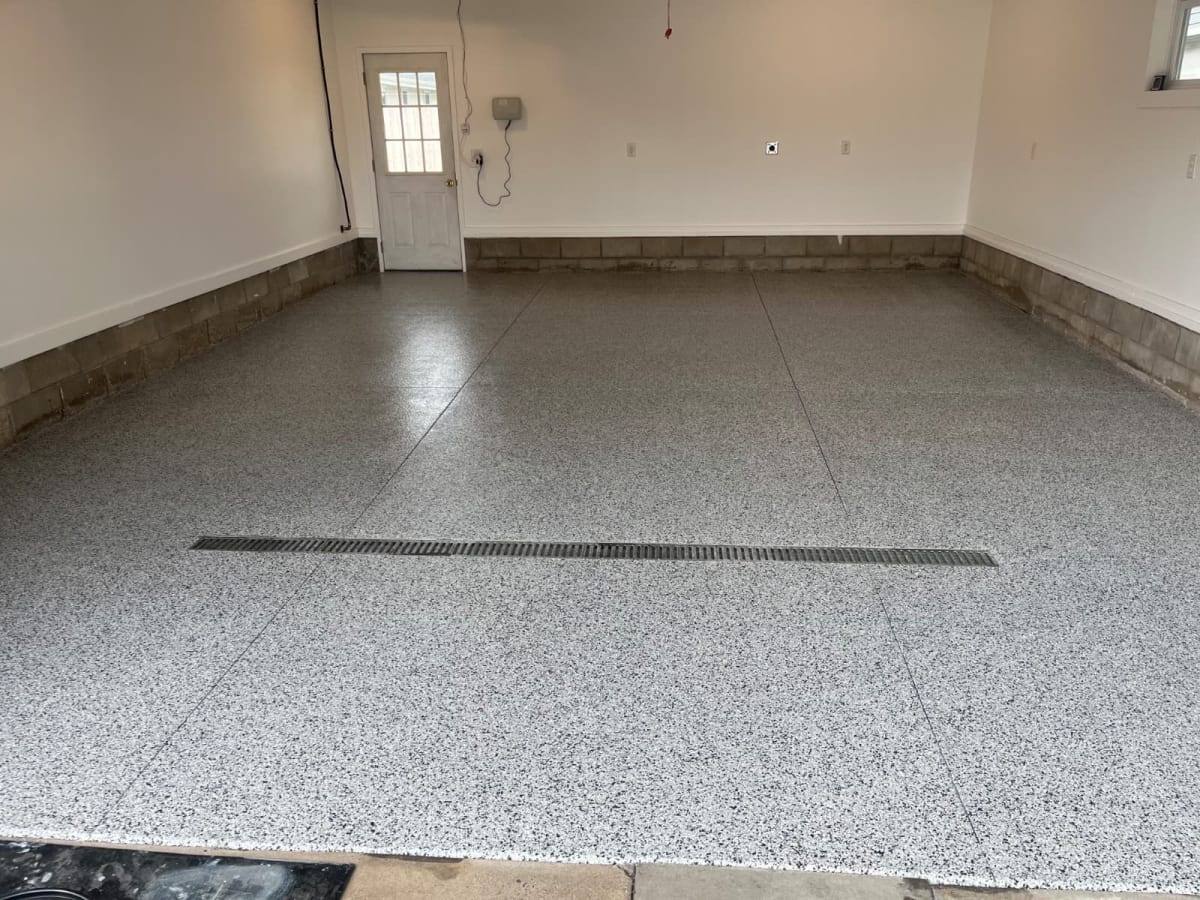
Tracked-in snow, wet cleaning and existing moisture transmission also affect readiness. The St. Cloud project photograph is a genuine PCS floor from a moisture-barrier report; it is not evidence of winter installation. Moisture assessment matters in every season.
Heating and ventilation need a plan
Heating must be safe and compatible with product requirements. Unvented combustion equipment can add moisture and introduce safety hazards. Do not run a vehicle or improvised fuel-burning heater in an enclosed garage to accelerate curing.
Ventilation, adjoining living areas and the safety data sheets deserve attention even when a product is described as low odor. Odor alone is not a reliable indicator of safe exposure. The installer should explain how temperature and ventilation will be managed together.
Scheduling questions for homeowners
Ask how long the garage must remain within the specified range, whether the floor needs additional drying or conditioning and what weather changes could delay the work. Plan an alternative parking and storage location without assuming a guaranteed next-day return.
PCS can assess the garage and proposed system before committing to a winter schedule. If maintaining suitable conditions is impractical, postponing work is a responsible choice. A sound installation takes priority over coating a slab simply because a calendar date is available.
Technical sources and further reading
These references support general education, not a claim that PCS installs every example product. The selected system's current product and safety data govern the actual work.
Sikafloor-264: example product-specific application and cure requirements