Shot Blasting vs. Grinding: Which Is Better for Garage Floor Preparation?
By Permanent Coating Solutions LLC ·
The better method is the one the floor system needs
Both mechanical shot blasting and diamond grinding can prepare concrete effectively when performed correctly. The right method depends on contamination, surface condition, existing coatings and the surface profile required by the chosen system. PCS documents grinding and shot blasting in its installation process; the purpose is a sound, clean, appropriately textured substrate, not simply using the most machines.
A coating's bond depends on what remains after preparation. A uniformly attractive finish cannot compensate for dusty concrete, weak surface paste or oil that prevents the resin from wetting the slab.
How shot blasting works
A shot blaster propels abrasive shot against the concrete to remove surface material and create texture. In a suitable recovery setup, reusable abrasive circulates through the machine while a connected collection system separates much of the dust and debris. This can be effective for producing a consistent profile over open floor areas.
Shot blasting is not dust-free and does not eliminate the need for containment, collection maintenance and cleaning. Edges, corners and areas inaccessible to the machine still require attention. Profile depth varies with equipment setup, abrasive and concrete condition.
How diamond grinding works
Diamond tooling abrades the surface to remove material, address high spots and remove some existing finishes. Correct tooling and passes can create a profile suitable for a coating specification. An appropriately matched dust extractor is important for both surface cleanliness and control of concrete dust.
Grinding is not inherently polishing. Tool choice and operating technique determine whether the surface is opened appropriately or left too smooth. It can complement shot blasting by handling perimeter work and other details that the larger machine cannot reach.
Choose the profile, not a slogan
Concrete Surface Profile, or CSP, describes surface texture. The coating manufacturer's requirements govern the acceptable profile for that system and thickness. More aggressive texture is not always better: a thin coating may not cover peaks, while an insufficient profile may compromise bonding.
Ask the installer how the profile will be checked and how contaminants and weak concrete will be addressed before and after profiling. Sika's preparation guide describes both grinding and shot blasting as suitable techniques when matched to the work. No single method fixes all substrate problems.
What homeowners should ask PCS
Ask which preparation steps are planned for your slab, how edges will be treated, what happens to loose concrete and how dust will be collected. For a previously coated floor, ask whether removal requires different tooling before the final profile is created.
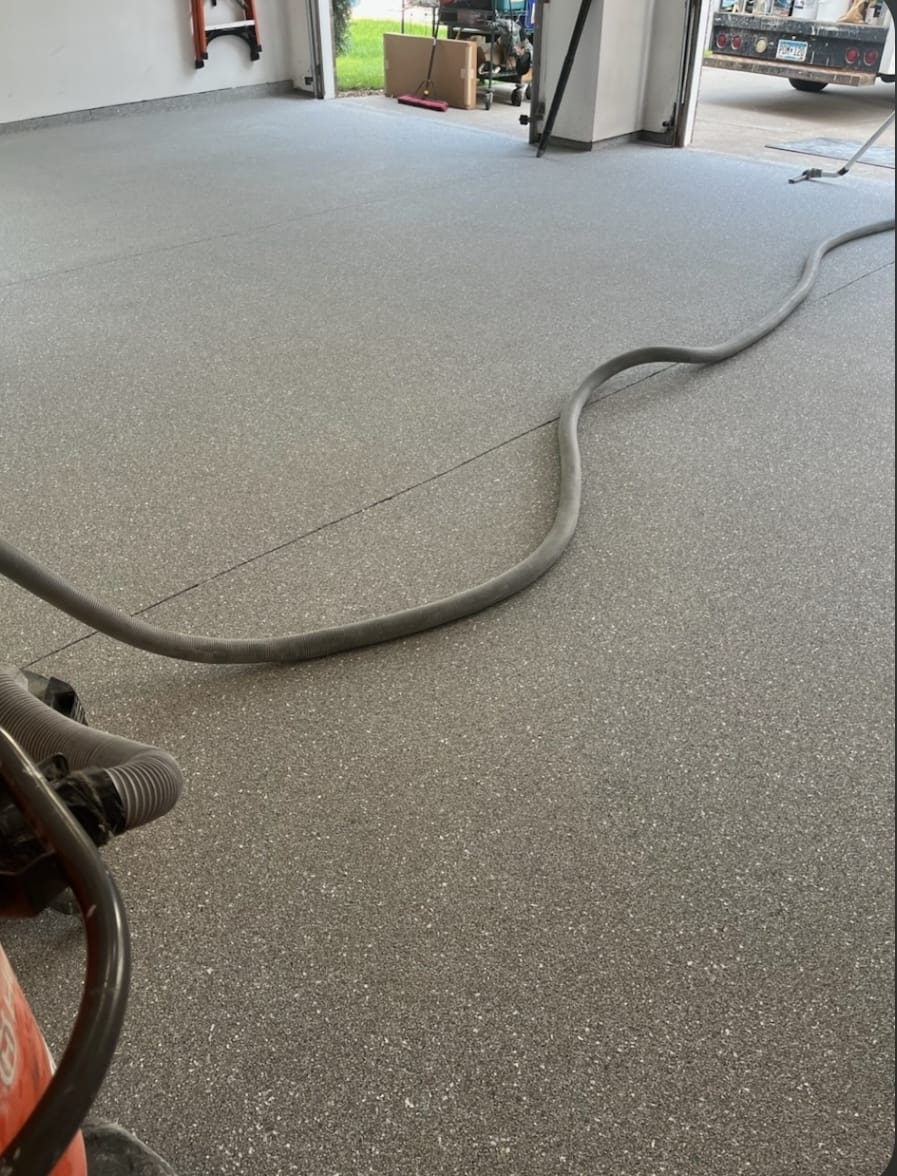
The featured photo shows preparation on the existing Waconia project, with a collection hose visible. It does not identify an unseen machine as a shot blaster. For a documented shot-blasting and moisture-barrier project, follow the St. Cloud report linked below. Preparation claims should describe the actual job rather than imply that grinding can never produce a suitable surface.
Technical sources and further reading
These references support general education, not a claim that PCS installs every example product. The selected system's current product and safety data govern the actual work.
Sika: concrete assessment and surface preparation
Sikafloor-264: example product-specific application and cure requirements