Why Do Garage Floor Coatings Peel or Fail?
By Permanent Coating Solutions LLC ·
Peeling is a symptom, not a diagnosis
Garage coatings can peel when the bond to the concrete or between layers is weaker than the stresses placed on it. Poor preparation is one cause, but moisture, contamination, weak concrete, incompatible layers and incorrect application conditions can also be responsible. A durable repair begins by identifying the failure rather than covering the loose edges.
Look at what separates. A coating lifting cleanly from concrete suggests a different problem from coating attached to crumbling concrete. Separation between two coating layers points toward a different set of compatibility, timing or preparation questions.
Contamination and weak concrete
Oil, silicone tire products, old sealers, curing compounds and embedded residues can interfere with adhesion. Simply grinding an oily area can spread contamination instead of removing it. The surface needs assessment and suitable decontamination before profiling.
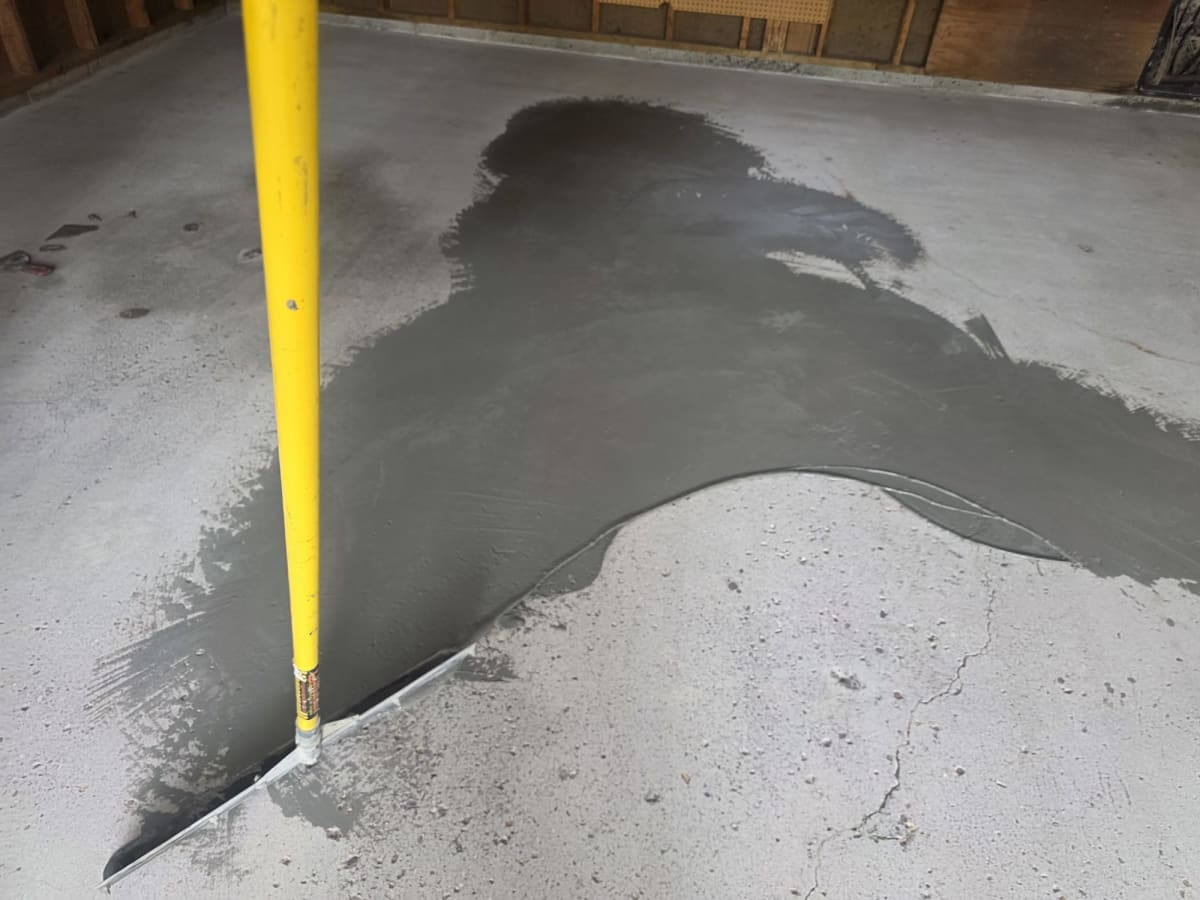
A strong coating bonded to a weak surface can pull away with that surface still attached. Laitance, soft patches and deterioration need removal back to sound material. Primer is not a universal fix for every contaminated or weak slab. The Mahtomedi photograph illustrates localized treatment on one documented PCS project, not a recommendation to use that approach everywhere.
Moisture and application conditions
Concrete can look dry while moisture is present within it. The selected system determines the required test method and acceptable limits. Water entry, vapor drive and unsuitable slab conditions may require a different system or work beyond coating.
Temperature and humidity affect curing and condensation. Cold concrete may remain below suitable application temperatures even in a recently heated garage. Incorrect proportions, insufficient mixing, missed recoat windows or trapped contamination between coats can also weaken the finished system.
Why repair often requires removal
New material over loose old material is only as reliable as the failing layer underneath. The installer may remove the existing coating, investigate the substrate and perform adhesion or compatibility checks before specifying a replacement.
Does peeling beneath tires prove that hot tires were the only cause? No. Tire heat and stress can expose an existing weak bond. The failure location is useful evidence, but the condition of the underside, substrate and other areas should be examined before choosing a remedy.
What to document before asking for help
Photograph the affected area and nearby intact coating. Note when the floor was installed, what products were used if known, where water collects and whether the damage changes with seasons. Keep peeling pieces for the installer to inspect, and avoid experimenting with solvents or patches that obscure the evidence.
PCS can evaluate coating and concrete conditions through its existing estimate process. Ask for a plan that addresses the cause, preparation and system compatibility. An explanation of those details is more useful than a claim that a different topcoat can never fail.
Technical sources and further reading
These references support general education, not a claim that PCS installs every example product. The selected system's current product and safety data govern the actual work.
Sika: concrete assessment and surface preparation
Sikafloor-264: example product-specific application and cure requirements